



- USD/CNH holds near 6.67 while the fix sits near 6.72.
- Support 6.66; resistance 6.72.
- Watch the Fed on 9 December.
InvestingCube chart · market data
The yuan is not going quietly. USD/CNH sits near 6.67. Beijing is working to slow its rise. The People’s Bank of China has set a weaker daily fix again and again this month. At the same time, the dollar hit a 19-month high. So, who wins the tug of war? Numbers first.
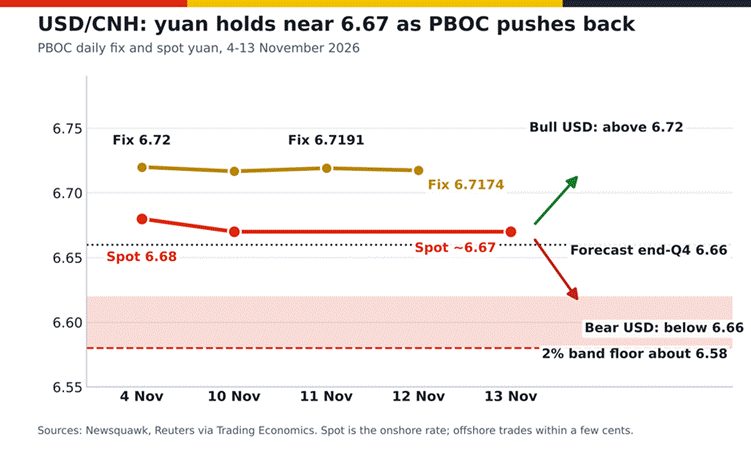
Figure 4: PBOC daily fix and spot yuan in China’s red and gold. Data as of 13 November 2026.
Reading the Two Lines
The gold line represents the daily PBOC fix. At present, the gold line is sitting around 6.72 and has been relatively stagnant. The red line represents the spot yuan. At present, the red line is sitting around 6.67. This disparity is what the story is all about. The market is seeking to have a stronger yuan; however, the Central Bank is fixing the yuan at a level that is lower than anticipated. Spot can move 2% on either side of the fix; therefore, the lowest possible value for spot would be approximately 6.58. This zone is indicated by the red band. The dotted line located at 6.66 indicates the forecast for year-end from Trading Economics. The green arrow indicates a dollar recovery above 6.72. The red arrow indicates a yuan recovery below 6.66. Spot is referred to as the on-shore rate. Offshore trades within a few cents of spot. Why do these rates matter? These rates indicate signals. These signals indicate where Beijing would like the yuan to trade. The yen is another Asian currency under stress. See our USD/JPY forecast.
Why Beijing Is Pushing Back
China’s export growth is strong, with its October exports growing by 35.2 percent. For all of 2026, the country’s trade surplus will exceed $1 trillion, which means that there are many more dollars flowing into China than out of China. When a nation exports a lot of goods, it typically strengthens that nation’s currency. Thus, China is taking action. China’s Producer Price Index (PPI) reached 5.7 percent in October, the highest level in four years. However, its Consumer Price Index (CPI) was only 0.7 percent. As of 2026, the yuan has increased in value by approximately five percent. In fact, before declining again, the yuan had reached a four-year high. There are some concerns among officials that the yuan is appreciating too quickly. Therefore, on November 15, 2026, the foreign exchange reserve ratio was increased from four percent to six percent. This increase in the foreign exchange reserve ratio is intended to slow down the appreciation of the yuan. Additionally, several commercial banks have increased their interest rates on dollar-denominated deposits. Official rules sit on the State Administration of Foreign Exchange site. Our SMCI report shows how US-China tension hits single stocks.
The Dollar Side
The dollar is strong. October US inflation came in hot. See the Bureau of Labor Statistics report for details. Core prices rose 0.3%. Traders now give a December Fed hike high odds. Higher US rates lift the dollar. A strong dollar hurts many Asian currencies. Our gold price forecast shows how that hits metals.
Mark 9 December on your calendar. That is the next meeting on the Federal Reserve calendar. A bigger hike would lift the dollar further. The yuan would face more pressure. See how another Asia-Pacific pair reacts to central bank moves in our AUD/JPY analysis.
Scenarios to Plan
- Bullish for USD/CNH: a break above 6.72 targets 6.75.
- Bearish for USD/CNH: a drop below 6.66 opens 6.62.
- Neutral: a range between 6.66 and 6.72.

Watch the daily fix in the short term. If the fix is lower than anticipated, this suggests that Beijing is supporting the yuan. In the long-term, Trading Economics expects 6.66 at the end of the year and 6.62 next year. Trade with a smaller position size. Always use a stop-loss order when trading. There is no strategy that will work every time. Remain calm. Do you intend to go against the current trend of the yuan or do you plan to ride along?
Frequently Asked Questions
Why is the PBOC setting a weaker fix?
The government of China (Beijing) is trying to slow down the rate at which the Chinese currency (the yuan) is increasing in value. For a few times during August, the daily “fix” for the exchange rate between the U.S. dollar and the Chinese yuan was lower than most currency traders anticipated.
What is the key USD/CNH support?
6.66 is the first floor. The 2% band allows spot to reach about 6.58.
What is the key USD/CNH resistance?
The PBOC fix near 6.72 is the ceiling to watch.
What is your outlook on USD/CNH?
Anonymous · no sign-up · results from the last 30 days · not investment advice